Tuesday, May 21, 2013
Antisocial Network By Timothy Gager
Antisocial Network
By Timothy Gager
Redneck Press
Revere, MA
By way of Mosherville, PA
39 Pages
$9.00
Review by Dennis Daly
Stabbing the front cover of a poetry chapbook with a butter knife, normally used to slather my toast with marmalade, is no way to start off the day. Later, as I sat in my well-padded reviewing room chanting ommmmmmmmmmm, ommmmmmmmmm, some anonymous soul again put this book back into my unreceptive hands and I reached for the scissors that I had hidden under the rubber mat. Another betrayal: someone had removed them.
Hours later, having, by secret techniques developed over a lifetime, reached the state of near perfect bliss, I tested myself. I took the aforementioned chapbook, turned it over to its unoffending (and blank) back cover and cracked it. I’m glad I did.
“Beep. Beep.” The first poem of this book by Timothy Gager, entitled Many Different Positions, appears on page 38 and proves, dare I say it, you can’t tell a book by its cover. At first glance the poem seems overly accessible, a surface piece that conjures up the image of a comical Chihuahua driving an automobile under the directions of a would-be driving instructor. Almost laugh-out-loud funny. But something isn’t right here; beauty and love lurch off the road. Danger and possible death smile down on the scene. Here’s how the poem ends,
Closing time comes quickly.
You bark, the dog’s going to kill us,
Like going over the waterfall in a barrel,
Or trapped in a theater that’s on fire.
You never looked as lovely as when
We kiss, the car lurches onto the shoulder.
Notice that the woman “barks,” and blames the dog. Intriguing for a last poem, or in our case, dear reader, a first poem. I turn the page quickly to the penultimate piece, Everything’s Connected. This poem exudes an interesting mixture of innocence, blueberries, and most of all eroticism. The poet does this by seemingly contrasting (lightheartedly, of course) the non-scientific Law of Attraction with its opposite, a universe of probability. Consider these lines,
All magic, illusion…
The law of Attraction
had led me to
pancakes, pie, yogurt
and last night a Blueberry ale
with fruit swirling
around like lottery balls
about to be picked
Attraction is also a theme in About Allison. The poem deals with how we perceive others and, more importantly, how we need them to live up to our perceptions. The poet’s persona wants a movie star. In fact he invents the movie. That’s not what he gets. The poet says,
I wanted a movie star, you wanted
to move back home where we
cannot take these walks,
and months go by
before you
call yourself an asshole,
for being out of touch,
then say, you think
of me often.
I suspect any poet who tries to convince his audience of his cynical hard-hearted nature may in reality be an unreconstructed (albeit disappointed) romantic. Gager in his very amusing piece entitled Black Heart Candy Company makes his argument,
My next great idea
Marketed for those
Anti-valentine’s day crusaders,
The true cynics who’ll
Gnaw on my little hearts,
And get me rich quick…
In a very different piece called Unwelcomed Guest the poet confronts his addiction and its demons. He’s not quite up for the fight but at least he now knows the score. He also will not back down and that is a good thing. The poet’s persona details his revelations,
you led me to drive down
a one-way the wrong way,
I blamed the Scotch,
started earlier when
it was still dusk
but then the blackness rose
up from below, I recall
I used to imagine hell’s address
was somewhere between my basement
and the center of the earth
but I know now different;
Hell is something
I’ve ingested…
I empathize with the image of hell geographically placed under the poet’s basement. I buy the plausibility of it. I have no doubt that my hell bustles directly beneath my cellar.
A Girl In A Loft, an imagistic piece, draws a line through life and then attempts to breech that boundary with a connecting vision. One side of the line collects an eye lash, panties, an easy breeze, a young girl’s cheek, and a “good morning.” The other side includes a course sofa, a gritty fabric, poverty, a groan, and the phrase “shit to all that.” The last sentence of the poem, “I’d like to know your name,” surprises with its weight and its ability to bridge the structural gap. I really like this almost-a-painting poem.
In the poem Like Moths in the Night the poet mulls over the deaths and survivals of addicted friends. It’s a serious meditation and one of the best poems in the collection. Culpability and guilt by identification enter the measures and are dealt with summarily. The poet’s persona emerges ever watchful with a determination to do no harm. Here is the poem’s ending,
Tonight, the outside air is cool
I feel his noose tighten
when I breathe,
and her needle
leaving a bruise
I feel his brains
blown out, like mine
splattered into the universe
for them, why not
me? I haven’t the guts.
I sit on a porch on a summer night
keeping the lights off
because there is nothing at all in that.
The first poem in the book (or the last, depending on which cover you start from), Ode to Wormwood, Gager constructs as a masterwork. The lyrical tone echoes its deep and rich notes, near prophetically. The attributes of wormwood, bitterness and a concentration of real poison (think alcohol and drugs), contrast and intermix with a wonderful resiliency (think the human spirit). It is this pollution and ultimate poison that kills the addict in the ruins of his soul—a love affair of sorts. The poem begins this way,
Growing on roadsides and wasted places
the wormwood braces itself against wind,
remains strong, please, there is a fierce poison
here, the water will be polluted, the
drink held in your hand, downed fast with eyes closed,
resting on the passage in the Bible…
This is top shelf writing by a prolific and thoughtful poet. I would only humbly suggest that in the future, when he publishes his Selected Works, he takes that book’s cover design in another direction.
Monday, May 20, 2013
Poet Tim Suermondt: A Headhunter on Wall Street: A Word Chaser in Somerville
Tim
Suermondt is the author of two full-length collections: TRYING TO HELP THE
ELEPHANT
MAN DANCE ( The Backwaters Press, 2007 ) and JUST BEAUTIFUL from
New
York Quarterly Books, 2010. He has published poems in Poetry, The Georgia
Review,
Blackbird,
Able Muse, Prairie Schooner, PANK, Bellevue Literary Review and Stand Magazine
(U.K.)
and has poems forthcoming in Gargoyle, A Narrow Fellow and DMQ Review among
others. After many years in Queens and Brooklyn, he has moved to Cambridge with
his wife, the poet Pui Ying Wong.
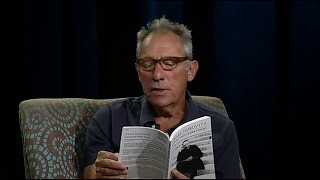
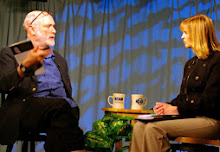
I had the pleasure to interview him on my Somerville Community Access TV show " Poet to Poet: Writer to Writer"
Interview with Doug Holder
Doug Holder:
For many years you were a headhunter on Wall Street. For the last 17 you were a
partner in your own firm. Basically you had to sell people…you had to have a
pitch. Words were important. Did your other life as a poet help you in that
regard?
Tim
Suermondt: I definitely think it did. Sometimes you are groping for a word and
you can throw one in much easier. This is because you are constantly dealing
with words and writing.
DH: Did your
years of working on Wall Street ever enter into your poetry?
TS: I wish I
could say yes, but no, just on the periphery. This probably is because it was
my job and I wanted to get away, do my poems, and be free. My poems are fairly
grounded though. So when I am away from business I put on another hat more or
less.
DH: The poet
Wallace Stevens was an insurance executive. He was hesitant to tell people at work
that he was a poet. He thought it might create doubt about his abilities. Was
this a problem for you in your line of work?
TS: No, that wasn’t a problem. I didn’t feel like
I had to hide it. My partner knew I was
a poet.
DH: You
moved from Brooklyn, N.Y. to Cambridge, Mass. with your wife. What was the
impetus for this move?
TS: Well, we have lived there so long. I lived in NYC for over 30 years. We wanted
to make a change. At first we thought maybe another part of NYC. But a lot of
that was prohibitive. We thought of running away to Paris. But we decided on a
base here. We found a nice apartment in East Cambridge and here we are. Recently
we attended a Cervena Barva Press reading in the Arts Armory in Somerville. We
are getting acquainted with the area.
DH: Your wife Pu Ying is an accomplished
poet. Do you have a competitive
relationship?
TS: You would think so. But I don’t think of it
as trying to outdo one another. But if Pu likes something I write I usually
think: “I got something there.” If she
doesn’t like it more often than not she is right. I would like to think I can
do the same with her—but her work is so good lately that I don’t have much room
for commentary.
DH: How did
you guys meet?
TS: We met
at a master class, at Poets House in NYC at the old Spring St. location. The
workshop was run by Jane Hirschfield.
DH: I read
in an interview where you describe yourself as an outsider. Many poets feel this
way. Why do you feel this way?
TS: I am not
part of any MFA program. I more or less read a lot of poetry—I have read the
poets who have stood the test of time. I thought to myself that I would love to
do this. I knew what I wanted to write but I had to work my way through it all.
I listened to many voices, but then I found my own. I am not going to be in a
Paris Review interview, but I like what I am doing with my writing. I have a
new collection out "Just Beautiful" published
by the New York Quarterly Books.
DH: Compare
the NYC poetry scene with that of Boston.
TS: New York
is monstrous …it is so huge. Boston compared to NYC is almost a town. In Boston
you feel there is an end here. NY keeps going—we haven’t explored the poetry
scene extensively yet—we are just getting started in Boston.
DH: You said
in an interview that oddities in writing bring more clarity. Can you talk about
this?
TS: I look
for the quirks in a poet’s works. When I come across something unusual, I
think: “I’ve never thought of it that way.” Oddities make you stop and
think—they change your perspective. I like poets who have quirks. There are
poets who have the blueprint down, but their work often seems a little cold or
dead. I hope I have some quirks in my poetry.
DH: You
wrote a poem “A Donut and the Great Beauty of the World.” You use a donut—with sprinkles
mind you—to examine the theme of the beauty of the moment.
TS: I think
we need to appreciate the moment especially when it is going well. I understand
that a lot of poetry is a bit down, and that is understandable. If you live
long enough you will have enough downers. In terms of appreciating when things
go well—you must realize these things won’t last so appreciate it even more.
There are so many tragedies—why not appreciate the good things? A lot of poets
say “I don’t want to talk about walking with my loved one on a beautiful summer
day.” They want to save the whales—they want to comment on something larger. Whatever
the poet writes about is great—no subject is off limits.
A
DOUGHNUT AND THE GREAT BEAUTY OF THE WORLD
I
try not eating the chocolate one with sprinkles
and
I don’t succeed—my pledge to my diet dies,
but
the taste validates my backsliding, the fine
smudge
on my lips beautiful as lipstick on a woman.
Someone
wrote “the great beauty of the world”—
maybe
I did, I can’t be sure—and I believe the words.
I
remember the ugly of the past and I know the worst
of
the future is already gearing up to make its visit—
I
finish the doughnut, clean away the evidence
and
head back to the couch to finish a book I love.
---Tim Suermondt
Thursday, May 16, 2013
Beautybeast by Adina Dabija translated by Claudia Serea
by Adina
Dabija
translated
by Claudia Serea
Port
Alworth, AK: North Shore Press, 2012
ISBN:
978-0-9794365-5-0
Reviewed
by David P. Miller
Romanian
poet Adina Dabija, living in New York and a practitioner of oriental
medicine, has published two award-winning books in Romania.
Beautybeast
is her first collection in English. Although I’m not able to
respond to the poems as originally written, I find Dabjia’s poetry
lively, dreamlike, and sometimes ecstatic. Her writing describes a
world of continuous, unpredictable metamorphosis, grounded in the
body and its many extensions.
Transformation
pervades her work. The frequent density of her imagery makes any
illustrative selection reductive, but examples are necessary. As one
instance, in “The world seen through a toilet paper tube,” the
lowly cardboard object begins as a tool for “cross section views”
-
In
a New York subway car, two rows of midgets.
Nature
had fun carving us in various ways.
Yes,
we are the latest adventure of the matter:
chunks
of clay with eyes
making
history on the edge of the pipes
that
spit and swallow us again.
The
viewing tube has already become both the “tube” of the subway and
a kind of cloaca, morphing later on into her hat, and in the next
poem, “At the end of the tube,” resuming its cloacal status:
[…]
I descend carefully on a straw
into
the garden. […]
through
pipes clogged with clotted blood
and
dinosaur bones,
through
the hungry mouths of the earth,
into
the digestive tubes of the worms
In the
book’s title poem, an accidental encounter with an undescribed
creature leads to a radical change in her sense of her own being:
Running,
I stepped on
a
sleeping beast.
She
opened her mouth and swallowed me.
Now
I sit in her black belly and bang on it with my fists.
[…]
Suddenly,
I turn my head, and in a corner of the belly,
I
see myself.
I’m
afraid.
Is
it possible that this creature
with
bloody soles and phosphorescent breasts
is
really me?
The
human body, and in particular the woman’s body, is both the agent
and object of changes among living states. “The woman who ate the
day and the night” is a kind of anti-creation goddess, who “sucked
all daylight / into my colossal breasts.” But even that was
insufficient, as the night remaining “soon disappeared / into the
crevice / between my legs.” This seemingly destructive energy is
linked in other poems with unexpected acts of re-creation. In “The
woman of wind,” deaths of relatives and acquaintances lead her to a
new survival strategy, fashioning a surrogate body:
I’m
thinking, if my body would die,
I’d
hire a wind
to
wear my dresses
and
imitate my walk, my shape, the way I move.
I’d
put lipstick on my lips of wind
and
call men into my room.
And in
“Jazz,” though violated and seemingly murdered by “the devil,”
she finds a resurrection: “From my buried body, the good plants
grow on my tomb / and embrace my lover’s feet.” Carnal being is
inherently fluid and, of course, erotic. She describes “How I turn
into an old wine”:
Your
lips are the fruits that make me turn into wine.
Come,
step down into the cellar
to
drink me directly from the barrel.
To make
oneself unavailable to this state, to keep this bodily knowledge at
arm’s length and submit to hypothetical dualisms, enables another
sort of metamorphosis, into desiccated being. “Impossible to make
sense” describes this using images that, with humorous irony,
invoke food in a metaphor that negates its function as nourishment:
Everything
could ultimately be reduced to an idea,
you
figure, walking down the street,
parting
the world in halves with your chest.
The
juicy, impenetrable world
seems
rather a hard piece of cheese
you
cut into pieces into order to chew on it easier.
[…]
The
binary machine of making sense
ticks
deep into your veins,
its
cold metal slowly replacing your blood.
Strikingly,
the act of lovemaking can only be imagined or described beforehand or
afterwards, as - assuming it is not also reduced to an idea - sex’s
immersion precludes the possibility of naming or distinction. In “On
love and blowing bubbles,”
The
best time I made love to you
was
before making love to you.
Then
we held hands, told everybody
everything.
We
allowed ourselves to be watched from a window above.
We
laughed, our hands filled with air,
throwing
into the others’ faces the whipped cream
extracted
from our ears.
This
joy, which comes up again “after making love to you,” becomes
“impossible”
while
making love to you.
At
that time, you don’t even exist
and
I don’t even exist.
We
can’t even imagine our existence.
[…]
with
your mouth, with my fingers,
with
my scar caressing your scar,
with
my pain sipping your pain,
until
nothing is left of us
Beautybeast
concludes with the prose poem, “An undifferentiated state,” which
may not have been intended as a summation for this collection, but
serves as one for me. Adina Dabija describes the simple exercise of
covering eyes, mouth, and nostrils - the latter “with your middle
fingers, or, even better, with your little toes.”
Imagine
you are an amoeba -- you don’t have lungs, eyes, ears or a mouth.
You are the world itself, before the world existed.
Re-emerging
from that imagined primal condition, you re-enter the world of
distinct perceptions, separate things and beings:
Let
the light come to you, the air, sounds, like an old friend coming for
a visit. You sit together in the kitchen, share a watermelon slice,
then you say goodbye and each of you goes back to your business.
The
value is not in pretending you aren’t this person, with this body
and this sense of self, but in remembering the flow beneath, where
everything perceptible exchanges its matter with all other things and
all boundaries are permeable. Where, as in “I chose the pumpkin
pie,”
There
is no difference between my poem
and
the pumpkin pie.
It’s
an undefined state, best described
by
a bug climbing my leg
on
a lazy afternoon.
Wednesday, May 15, 2013
Ibbetson Street Press Poet Lo Galluccio named Populist Poet of Cambridge
![]() |
| Lo Galluccio |
We are glad to say Lo Galluccio, Bagel Bard, published Ibbetson Street Press poet (" Hot Rain" 2004), has been elected Cambridge Populist poet. Lo has been in numerous issues of Ibbetson Street, was on the planning committee for the Grolier Poetry Room Reading Series, sponsored by the Ibbetson St Press and the Blind Elephant Press, and was a reader at the Somerville News Writers Festival founded by Timothy Gager and Doug Holder in 2003. She has also participated in many of our readings for the last decade...so glad for you Lo!
Here is the press Release from the Cambridge Arts Council:
FOR IMMEDIATE RELEASE
May 14, 2013
Contacts:
Jason Weeks, Executive Director
617-349-4383 or jweeks@cambridgema.gov
Julie Barry, Director of Community Arts
617-349-4381 or jbarry@cambridgema.gov
New Poet Populist Named In Cambridge
Cambridge, MA –The City of Cambridge announces that Lo Galluccio has won election as the 2013 Poet Populist. The Cambridge Poet Populist is selected by Cambridge residents to represent the art of poetry for the City of Cambridge. During her two-year span, Lo will have the opportunity to affect the artistic landscape of the Cambridge community and help the unique creative spirit of Cambridge thrive. The official induction ceremony for Galluccio will take place under the Poet Populist Tent at the Cambridge River Festival on Saturday, June 1, 2013 2:30pm.
Lo Galluccio is a vocal artist, memoirist and poet whose roots lie in the Lower East Side of NYC, though she is a Cambridge native and a Harvard graduate. Lo has released three books in Boston, since returning in 2001: “Hot Rain,” a chapbook with illustrations put out by Ibbetson St. Press, “Sarasota VII” a prose-poem memoir published by Cervena Barva Press and “Terrible Baubles” a chapbook on Propaganda Press. Some of the poems in “Terrible Baubles” were set to music or made into songs for a CD released on Studio 234 records this past year, with piano by Eric Zinman and cello by Mobius artist Jane Wang. Lo has two other vocal CDs “Being Visited” on the Knitting Factory label in NYC, and “Spell on You,” self-released in Boston, an avant jazz and blues CD. Her websites are www.logalluccio.weebly.com and www.logalluccio.alalla.com. She was the Arts editor of the Cambridge Alewife from 2003-2007 and continues to review poetry for the Ibbetson St. small press blog. Lo has developed a distinctive lyrical style of poetry and uses spoken and sung iterations for some of her pieces, especially the more surreal texts. As a page poet, Lo often likes to follow a rhyming pattern, following poets like Anne Sexton. She hopes to combine her love of music and spoken word as the Poet Populist while reaching out to many venues in Cambridge and including all styles of poetry, including slam.
Cambridge Arts Council is a city agency that funds, promotes, and presents high-quality, community-based arts programs for the benefit of artists, residents, and visitors. Established in 1974, Cambridge Arts Council is one of the oldest and most dynamic arts agencies in the country. As a public nonprofit, Cambridge Arts Council operates through funding from local government, private foundations, corporate sponsors, and individual donors.
www.cambridgeartscouncil.org
The Cambridge Poet Populist program was developed in 2007 to celebrate the creation and appreciation of poetry throughout the city. The Poet Populist will be honored in an official capacity, receive a stipend, and maintain a schedule of public appearances for a two-year term. Cambridge poet Peter Payack initiated the role in 2007, and was succeeded by Jean-Dany Joachim in 2009 and Toni Bee in 2011.
The Cambridge Arts Council is supported in part by the City of Cambridge, the National Endowment for the Arts, and the Massachusetts Cultural Council, a state agency.
Monday, May 13, 2013
Poet Sassan Tabatabai: A Persian poet of mourning, exile and love.
Sassan Tabatabai has composed a book of delicate mourning, exile, and love. Ancient Persia and modern Iran harmonize in his vision, as do the ancient poems of Rudaki and Rumi and the contemporary poems of Kadkani in Tabatabai’s translations. Sensuous, rueful and clear, these poems recreate lost worlds in imagination: their Beloved is both a country and a mysterious female figure worthy of the poet’s longing.
— Rosanna Warren ( Commenting on Tabatabai's new poetry collection UZUNBURUN ( The Pen and Anvil Press)
INTERVIEW WITH DOUG HOLDER
Born in Tehran, Iran, Sassan Tabatabai has lived in the United States since 1980. As a poet and scholar of medieval Persian poetry, he is the author of Father of Persian Verse: Rudaki and His Poetry (Leiden University Press, 2010). He teaches humanities and Persian literature at Boston University and Boston College, and is Poetry Editor of the literary journal News from the Republic of Letters. Most recently, Tabatabai is the author of Uzunburun, a collection of poetry and translations published in 2011 by Pen & Anvil Press in Boston.
I had the privilege to interview him on my Somerville Community Access TV show Poet to Poet: Writer to Writer.
Doug Holder: You are an accomplished poet, but you are also an accomplished boxer. Is this a surprise to many people?
Sassan Tabatatbai. To most people it is a surprise. I think they consider poetry to be soft and emotional and boxing the complete opposite. But they have a lot in common. There is something philosophical about boxing. Something that teaches you about yourself. There is a kind of deep introspection that you can get from both poetry and boxing. Nabokov took boxing lessons for instance.
DH: You were poetry editor for News from The Republic of Letters founded by the acclaimed writer Saul Bellow at Boston University. How was it working with the man?
ST: I got introduced to Bellows by some of my old professors, and that is how I got involved with the magazine. When I started working with Bellows--it was basically about running things by him for his approval. He was still sharp at that time. He kind of deteriorated slowly over time. He seemed to have a very piercing look. When he looked at you, it was as if he was formulating one of his characters. But he was always very sharp with details. Even when he got older he was still on top of all the material he read in the past.
DH: Your grandfather served in the Iranian army reaching the rank of general, until 1979--the time of the Islamic Revolution. You are involved in a project translating his memoirs. Talk about this.
ST: My grandfather had a whole career in the military. He reached the rank of the general. With the Revolution we all went into exile and left the country. Ultimately he settled in Atlanta , Georgia. I inherited his papers. His papers consisted of his memoirs, and his poetry. I am in the process of translating both the memoirs and poetry. Most of the memoir was from the time he was stationed in the mountains of Kurdistan. This was right after World War 2 when Soviet troops still occupied parts of Iran. It is very fascinating stuff as far as giving historical insight on a real human level on the political situation.
DH Was it difficult translating from the Persian?
ST: Translating poetry creates all kinds of problems from any language. In Persian-- for instance-- our pronouns don't have gender. We don't distinguish between he and she. Persian does not have articles--this also creates problems. When translating poetry you need to transfer the meaning of the poem--at the same time you can't kill the poem...the musicality of the lines. Oscar Wilde said and I paraphrase:" A literary translation is either faithful or beautiful, but rarely both."
DH: Are Americans aware of Persian verse?
ST: I would say yes and no. Rumi is over- represented here. This 13th Century mystical poet was the bestselling poet in the U.S. just a few years ago. There is something about Rumi that resonates with the contemporary reader. But there is a huge Persian canon that is neglected.
DH: In your poem Caspian Summer from your new collection UZUNBURUN, you use a phrase your mother used during your childhood and it seems almost like a poetic prompt, bringing the reader into a womb of memory:
"Come inside, she would say, it's almost dark"
Yes this is a poem of childhood memories. The Caspian Sea brings back the memories of childhood. The humidity, salt, garlic, the moist sheets--is still something I remember. We as kids played outside and at some point we were called back to the house. Part of these memories is a full sensory experience. And it is sound and one of the sounds is the voice of my mother calling me back in.
Caspian Summer
I can still hear my mother’s voice
sifting its way through the orange grove,
broken by dusk and distance, calling
me back to the villa on the hill
away from my August friends:
local boys who didn’t need sunscreen,
who caught water snakes with their bare hands
and carried frogs in their pants pockets.
sifting its way through the orange grove,
broken by dusk and distance, calling
me back to the villa on the hill
away from my August friends:
local boys who didn’t need sunscreen,
who caught water snakes with their bare hands
and carried frogs in their pants pockets.
"Come inside," she would say, "it’s almost dark."
Inside the screened porch, safe
from mosquitoes and night sounds,
glowing comfort awaited:
smell of fried garlic, rattle of dice
rolling on the wooden backgammon board,
and moist, sticky tiles under my bare feet.
Inside the screened porch, safe
from mosquitoes and night sounds,
glowing comfort awaited:
smell of fried garlic, rattle of dice
rolling on the wooden backgammon board,
and moist, sticky tiles under my bare feet.
Later, tucked into cool, damp sheets,
my little sister asleep,
I listened to the ebb and flow
of adult conversations downstairs,
cornices of excitement followed by lulls
filled with the sea’s silence, distant
waves crashing, mute on the deserted shore.
my little sister asleep,
I listened to the ebb and flow
of adult conversations downstairs,
cornices of excitement followed by lulls
filled with the sea’s silence, distant
waves crashing, mute on the deserted shore.
Strange, that as autumn leaves
bruise in New England, I can still
taste the air of a Caspian summer,
heavy with humidity and salt.
Strange, that as time thickens, the distance
between us shrinks.
bruise in New England, I can still
taste the air of a Caspian summer,
heavy with humidity and salt.
Strange, that as time thickens, the distance
between us shrinks.
Sunday, May 12, 2013
Coffee House Confessions by Ellaraine Lockie
Coffee House Confessions
Silver Birch Press
Los Angeles CA
© Copyright 2013,
Ellaraine Lockie
ISBN-13: 978-0651727677
Softbound, $10, 43
pages
Review by Zvi A. Sesling
How many times have you
sat in a coffee house or café observing people, taking notes or
writing poetry? Most poets have at one time or another. In the back
of Coffee House Confessions,
Ellaraine Lockie’s tenth volume of poetry, it states she, “writes
every day in a coffee shop no matter where she is in the world.”
Often we find her in a
Starbucks, but no matter, the poems carry humor and keen observation
as in White Noise and Other Muses:
The woman sitting next to me
in Starbucks says
I wish I were as dedicated
to something
as you to whatever you do
here every day
Little does she know I’m
eating her alive
Dissecting her and spitting
her out on paper
Or in another poem
titled Ashes:
He’s been to this Starbucks
before
Someone at a nearby table
says
he rotates to avoid arrest
A mountain man or maybe Santa
Claus look
Except skinny as a stage-four
Jesus
Guitar on top of his grocery
cart
over piles of clothes and a
bag of cat food
Cat food, when there’s no
place for a cat
Twenty-six degrees last night
and damp
But not everything is
stateside or Starbucks. Indeed we find her in Italy and Portugal and
other unnamed locations, yet each poem provides insight into the
people at each site.
A few samples include
Man About Town
in which “His stride was a study in meter/And any female looking
his way/from the Leaf and Bean/as he crossed the street/would become
an immediate student”
Or there is the study
of a female in Short-Shorts on Midlife
Legs: “Does she know/how the back of
her thighs/look without shadow of shade
Ms. Lockie knows what to look
for and how to put it down on paper. The latter was in a Peet’s
somewhere that doesn’t really matter because it is the observation
and its placement on the page that brings it all to life.
In reading this I was
often chuckling or smiling inside at the descriptions of people who
might turn purple if they read this book and recognize themselves.
Are you one of them? After all, one of the coffee houses could be in
your town.
__________________________________________
Zvi A. Sesling
Reviewer for Boston
Small Press and Poetry Scene
Author, King
of the Jungle and
Across Stones of Bad Dreams
Editor, Muddy
River Poetry Review
Editor,
Bagel Bards Anthology 7
Friday, May 10, 2013
Nothing In New England Is New: The poet’s experiences in New England, America by Rick Lupert
Nothing In New England Is New: The poet’s experiences in New England, America
By Rick Lupert
Ain’t Got No Press
ISBN 978-0-9820584-5-9
198 pages
Review by Tom Miller
Rick – and I call him Rick because it seems appropriate that I do so after reading this book – why you ask? Because even though we have never met, reading this book of poetry makes me feel like a friend has just shared some observations about places and experiences he recently had on a vacation to New England. So anyway, my new friend Rick, whose perception of the world is one or two degrees off in either direction from true north, has managed to capture some essence of the background fabric of places that sometimes take themselves too seriously and jotted them down in a very entertaining way. He even provokes a laugh or two.
The trip starts well:
“At LAX
If you are waiting in the line at Burger King
you are doing the wrong thing.”
“Fondly Assessing the Situation
Oh the airports my luggage has seen.”
In Connecticut:
“Sign of the Apocalypse
I see a stretch limousine parked
at a McDonalds somewhere in Connecticut.
My God they should erase this whole state
and start over. They’re just doing it wrong.”
In Springfield MA:
“A Japanese Corner by
John Haberle, 1898
One artist has painted the words do not touch into his painting
which has saved the museum a bundle on paying a guy to
stand in the room and say that all day.”
In Portsmouth NH:
Excerpt from
“At Colby’s Breakfast and Lunch
II
Colby’s is slanted
You feel at any moment you
and your breakfast might slide out
the front door onto Daniel Street.”
In Salem:
“The Men’s Bathroom in the
Salem Mall is Not Labeled
That’s how they tell if you are a witch,
if you know to go inside.
P.S. It does smell like witchery inside.
I mean pee s.”
(Having been there, I understand the both the angst of forced choice under pressure and the relief of finding a urinal on the wall thereby validating your selection. Oh, and Rick, in the past couple of days someone took the guess work out temporarily by taping the word “MEN” in blue tape on the proper door. Not sure how long that will endure. Removing said designation on said doors seems to be a sport in Salem.)
In Boston:
“There is a Store Here Called
Grab and Go
They forgot to put and pay in the name.
It’s causing a problem.”
There is more and this book is worth an hour or two’s time soaking up some afternoon rays and suds on the deck and being amused at Rick’s further takes on the locales on his itinerary. He got ‘em pretty right.
Rick has authored fifteen other books and his web site poetrysuperhighway.com is worth a visit as well. Check ‘em out.
Subscribe to:
Posts (Atom)